“Back again?”
Art nods.
“Same flask?”
Another nod. Always the same flask.
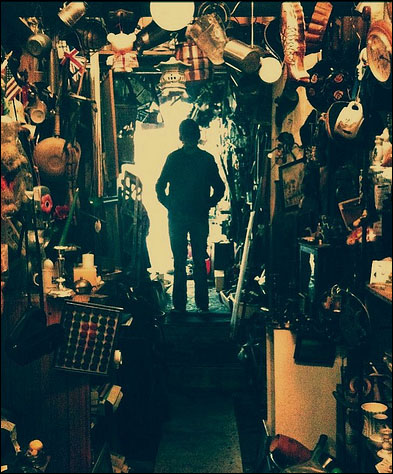
Parataxis leads Art past aimless dream browsers to the back room.
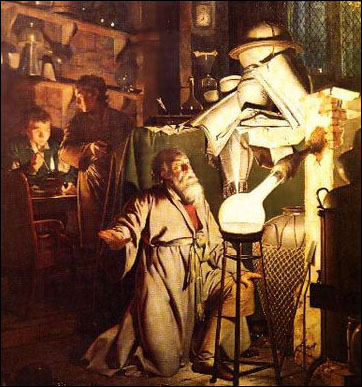
Reaches a flask from a head-high shelf. Tenebrous emerald vapour writhes and swirls within the bulbous form.
“Getting low…”
Art shrugs. Hands over two crumpled notes.
“Sweet dreams.”
Art doesn’t reply. Heads to a booth in the darkness, draws the shabby curtain closed.
The cork stopper releases easily, loose through repeated use. But snug enough to prevent the precious contents leaking.
Misty green tendrils crawl up the slender glass neck. “Like it knows me…”
books
The Persistence of Memory
Standard“They look like ants to me. Little black ants crawling all over it.” He narrowed his eyes, leant as close as he dared without setting off the alarms.
“Hmmm. Maybe.” Her tone was sceptical. “It’s kind of hard to tell from here, but he did have a thing about them you know, Dali, so they could be ants. Sandwich?”
“What? Oh, yes, right, thanks. Ham?” He took a bite and winced at the instant brain fire.
“Oh, sorry love, too much mustard again? Might have been a bit heavy-handed with it, I really must learn to go easy!” She grinned sheepishly.
“Bloody hell! You need to watch that. Almost blew my head off! I’m sure they’re ants. But why are they on a pocket watch?”
Breaking The Silence
StandardWell hello there Internet, how splendid to be back! Please say you missed me, or there may be the most frightful scene.
I have, as the more eagle-eyed amongst you will have observed, been away. I could spin you a sordid yarn of diamond-smuggling and a brief sojourn in a hellish Peruvian jail, but the truth is far more prosaic. I lost my voice. Not in a “warm brandy, kitten round the neck” sort of a way. No, that would have been far more enjoyable.
The Blogger’s Worst Nightmare
In what must surely be the worst professional catastrophe which can befall writers and bloggers, I found myself with nothing to say and no means of saying it. Inspiration dried up so entirely that even the trusty old standby methods of finding post inspiration failed. Moreover, whenever I attempted to write, the words came out flatter than a Friday-night karaoke bar. No fun, no lightness, no substance, no purpose. None of that which regular readers have been kind enough to say they enjoy in my writing. Which led me to thinking…
Developing Your Characters: What Has It Got In Its Pocketses?
Standard
A writing teacher (and multi-published novelist) once told me that to really understand a character you’re writing, you should make a list of the items they carry in their pockets.
While I hate to disagree with such an august mentor, I’m afraid that I simply have to.
You see, if you take a peek in my pockets at this very moment – an undertaking from which I heartily dissuade you – you will find a handkerchief, some small change and a couple of buttons which popped off my coat. A character who uses money, occasionally blows his nose and shivers a lot does not a compelling story make.
This may be different for the fairer sex. I have never plucked up the courage to venture into the deepest recesses of a lady’s handbag, so am not intimately acquainted with the traditional contents of such. However, I suspect them to be of an equally utilitarian nature; I would hazard a guess at purse, travelcard, keys, phone and a little spare make-up.
Show me the woman who carries a blunderbuss, a taxidermied stoat and an assortment of kazoos in her bag and I’ll show you a story!
A Room With Views
In short, the whole pocket exercise doesn’t really work for me. No. Far more telling and illustrative are the items which characters have dotted around their living room. In a supposedly private space, we reveal far more of our true natures and past lives than we could ever fit in a pocket.
Why Social Media Is Like A Kitten
Standard
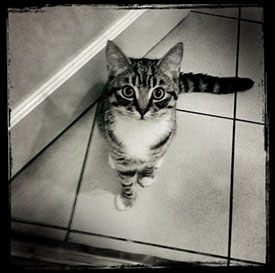
Go on, admit it – I had you at “kitten” didn’t I?
I see an awful lot of posts from indie writers complaining that they simply don’t have time to market themselves and their writing on social media. An awful lot. What with the demands of a ‘real life’ and the time we need to dedicate to writing whatever it is we’re trying to publicise, there just aren’t enough hours in the day.
And let’s be honest, there’s no point in spending all your time on marketing if it leaves you with nothing to market. I’m no economics expert (a lucky ‘C’ in O-Level maths in fact) but even I can see that the laws of supply-and-demand demand that there’s at least some supply.
And that’s where the kitten comes in.
Mind The Gap!
StandardPlot holes, those devious little blighters, have a knack of popping into existence just where you least expect them.
I am not the kind of chap who outlines a novel before jumping in to the fun of writing it. Broad brush strokes, a skeleton framework of ideas and then it’s chocks away! My transatlantic friends call this being a ‘Pantser’ – flying by the seat of one’s pants as the story takes one from point to point in a free-wheeling, fast-flowing fashion. Being from the side of the pond where the cucumber sandwich still reigns supreme, the term ‘pants’ has less savoury connotations for me. No, Pantser will not do at all. Ladies and gentlemen, I am a Trouserist.
The situation is further complicated by the fact that I don’t have the luxury of writing every day. Much as I would love to, the demands of daily life and a mortgage mean that I often struggle to find the time to write. Progress on the novel is sporadic, at best.
I am a self-confessed Sporadic Trouserist.
And that is where the plot holes worm their insidious way in… (you don’t want holes in your sporadic trousers, I assure you).
What Writers Can Learn From Facebook’s Birthday
StandardAnyone with eyes or friends can hardly have failed to notice that this week marks Facebook’s 10th birthday.
If you’re anything like me (and I do hope you are, you lucky people you) then your timelines will have been inundated with My Facebook films. If, at this point, you’re asking “what’s Facebook and what’s a timeline?” then your Author Marketing Plan is #failing #abysmally. Much like hashtags on Facebook really.
One ring to bind them
Yes, this week we’re all awash in personal lookbacks over the past however many years we’ve been sharing our lives online. Top-rated photos, most-liked posts and sundry other reminiscences all rolled up into a one-minute-five-second film encapsulating what FB regards as our most notable assets.
So, I hear you wondering aloud, what has any of this got to do with writing?
The Secret To Motivating Yourself To Write
StandardIn my previous post, The Unicycle Of Prevarication, I explored how we indie authors often self-saboutage by “not being able to find the time” to write. This, despite the multitude of less pleasurable things we do find the time for, such as cleaning the moat or milking the peacocks.
Today, I intend to lay bare the One True Secret of how to find the time and motivation to write even when the odds seem stacked against you like handcarts against the barricades.
But first, I feel I need to issue a warning.
WARNING: You’re not going to like the answer.
You see, there genuinely is an answer to the eternal problem and it’s one that I’ve learned the hard way over the five years in which I’ve been occasionally toying with, and occasionally grafting at, my first novel. Are you ready to find out what it is? Excellent. But first, please put down any sharp objects you may be holding, as I don’t wish to find myself impaled.
Here goes then…
You have to force yourself.
I said you wouldn’t like it, didn’t I?
The Unicycle Of Prevarication
Standard
“No, really, I DO want to write, I just haven’t had the time!”
How often has that line played out in your head? If you’re anything like me, probably around 1000 times a week I’d guess. And that’s on the quiet weeks.
We want to write in exactly the same way we want to go to the gym, or train for a run, or learn to unicycle. They’re all things that, once we’re actually in the process of doing them, we enjoy. But they also have one other factor in common – it takes a great deal of effort and commitment to start doing them instead of doing something easier instead.
Here’s a perfect example: this weekend I was absolutely, definitely going to commit at least one hour to my current novel. I did it last weekend and it felt amazing. Only, this weekend, I also had to take the cat to the vet. And then hit the sales to buy a new pillow (there’s no stopping the rock ‘n’ roll some days, I tell you!) Oh yes, then to the supermarket to pick up ingredients for dinner, followed by creating a pie for the aforementioned repast. By which time it was 8pm, I was tired, hungry and there was some mindless TV on.
Killing Your Darlings
StandardIt seems there’s barely a day goes past without someone somewhere posting about the “rules” of writing. Now, I’m not entirely sure that I agree with this; I feel there are far too many so-called rules imposed upon one of the most creative pursuits imaginable.
Creativity doesn’t follow rules – creativity bends, warps and downright breaks rules. Look at James Joyce, Flann O’Brien, Dalí, Picasso, Man Ray, John Lydon… you can add plenty of your own favourites to that list.
Or, as Thomas Edison so beautifully put it:
There are no rules here, we are trying to accomplish something
Of course, some rules should be followed, but only because they work. I prefer to consider these principles, not rules. A couple of examples which will be familiar to all writers:
- Active voice is more dynamic than passive and drives a more immersive story;
- Showing will deliver a more lasting impression than telling every time;
- Adverbs will slow down your plot and bog down your readers;
However, there are others which simply beg to be broken in the name of trying something new. One of these, for me, is the advice to “kill your darlings” – that is, no matter how much you love a particular phrase, situation or scene, if it doesn’t fit the story, you have to get rid of it.
Really? Says who?
Unless it’s a major glaring departure from the rest of the book, I reckon you can work it in. OK, so I have a hard time imagining blue-skinned beings from the planet Morgos landing on the deck of the Pequod with laser harpoons – although it would, admittedly improve the tale no end (you can read my thoughts on Moby Dick elsewhere in this blog.)
Otherwise, if you create something of which you are justifiably proud, should you really allow perceived wisdom to stifle that creative impulse and shut it away in a box labelled Conformity?
One of the key purposes of any art form is to bring innovation to light. By adhering too strictly to what should actually be flexible guidelines, writers – particularly new writers – run the risk of inhibiting themselves and diminishing their work. When we start out on the writing journey, we find ourselves suddenly (Elmore Leonard says never to use “suddenly”, but sorry Elmore, been and gone and done it) in the midst of a wilderness with no signposts. So we turn to age-old wisdom and advice. This has to be framed somehow, so is given the label “Rules of Writing.” Before you know it, off we go down the path previously trodden by everyone else and end up creating something which… well… has been done before.
I have one particular phrase in my novel which I love. I’m very proud of it and I believe it encapsulates a feeling we’ve all had at one time or another in our lives. I have never seen it expressed in the way I’ve put it (apologies if that sounds arrogant by the way.)
But…
It didn’t fit within any of the versions of the scene I had written. I knew it was the right place, the right time and the right phrase. But it stuck out like a sore thumb nonetheless. “Kill your darlings,” my inner editor yelled over and over again, “get rid of it!”
So I did. And I missed it. And the scene missed it, And the book missed it.
That’s the point at which I tore up the rule book and decided that rules are indeed there to be broken. It would have been far easier just to lose the phrase and move on. Instead, I stuck to my guns, re-worked a whole chunk of the scene and lowered the prominence of that phrase, so it blended seamlessly.
And do you know what? It works. The scene is stronger, more natural and imbued with greater significance.
So before you succumb to the safer option of following the rules regardless, I say try throwing them out of the window, but make sure they land within easy reach just in case you need them again in future.
Am I wrong? Have you fallen foul of rule-breaking in your own work? Or do you find a little occasional bending a liberating experience?